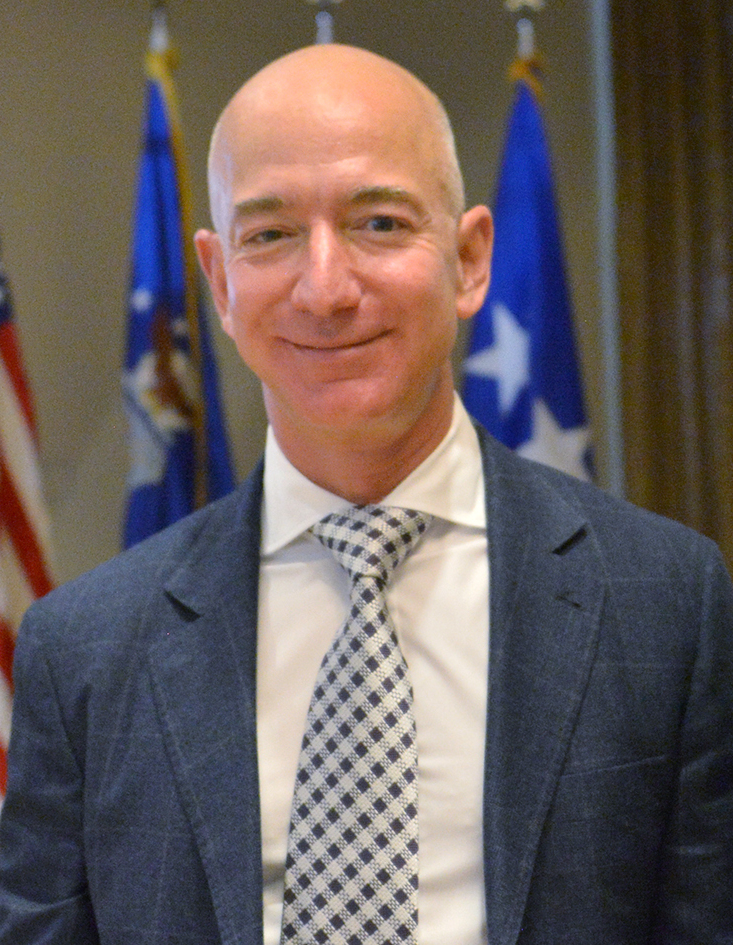
The Jeff Bezos Empire: Navigating the Vast Universe of Amazon, Blue Origin, and The Washington Post
In an era defined by relentless innovation and unparalleled wealth creation, few figures cast as long a shadow as Jeff Bezos. An entrepreneur, e-commerce pioneer, and visionary, Bezos has not merely built companies; he has forged entire industries and reshaped the very fabric of commerce, media, and even humanity's future in space. While a general search for "net worth" might bring up various individuals, including queries like "jeff devlin net worth," it's important to clarify that the colossal financial achievements and empire discussed here pertain exclusively to Jeff Bezos, the subject of our focus, whose estimated fortune places him among the world's wealthiest individuals. This article delves into the intricate tapestry of his empire, exploring the origins, impact, and future trajectory of Amazon, Blue Origin, and The Washington Post.
The Genesis of an E-commerce Titan: Amazon's Unstoppable Rise
Jeff Bezos’s journey began not in the digital realm, but in the traditional world of finance. Born in 1964 in New Mexico, Bezos displayed an early passion for computers, a fascination that led him to Princeton University, where he studied computer science and electrical engineering. After graduating, he honed his skills on Wall Street, eventually becoming the youngest senior vice president at the investment firm D.E. Shaw in 1990. This lucrative career offered stability and prestige, yet Bezos harbored a nascent idea that would soon disrupt the world.
The epiphany struck in 1994, when Bezos encountered a report indicating the internet's explosive growth. He famously identified the opportunity to sell books online, a decision that would dramatically alter his life and the global retail landscape. Quitting his high-paying job, he founded Amazon.com from a garage in Seattle, initially as an online bookstore. The gamble paid off spectacularly. Bezos's foresight wasn't just in selling books, but in understanding the potential of the internet as a platform for unparalleled customer convenience and selection.
Amazon's evolution from a niche bookseller to a retail juggernaut is a testament to Bezos's long-term vision and relentless customer obsession. Over the decades, Amazon expanded aggressively, venturing into electronics, apparel, groceries, and virtually every consumer good imaginable. Key milestones include the launch of Amazon Web Services (AWS) in 2006, which revolutionized cloud computing and became a powerhouse of profitability, and the acquisition of Whole Foods Market in 2017, marking a significant foray into physical retail. In 2022, Amazon further diversified its entertainment portfolio by purchasing MGM Studios, reinforcing its position in content creation and streaming with Prime Video.
What sets Amazon apart, and offers valuable insights for any entrepreneur, is its foundational principle: customer obsession. Bezos famously stated that Amazon started with the customer and worked backward, a strategy that led to innovations like one-click ordering, personalized recommendations, and Prime membership. This continuous pursuit of customer satisfaction, coupled with a willingness to take big risks and innovate, transformed Amazon into the global force it is today. For aspiring business leaders, the lesson is clear: deeply understanding and serving your customer remains the most potent growth engine.
Beyond Earth and News: Blue Origin and The Washington Post
Bezos's entrepreneurial spirit and vast wealth weren't confined to e-commerce. His ambitions stretched both into the cosmos and the critical world of journalism, demonstrating a diverse portfolio driven by a desire for long-term impact rather than immediate profit.
Blue Origin: Pioneering Humanity's Future in Space
Founded in 2000, Blue Origin is Bezos's private space exploration company, born from a childhood dream and a conviction that humanity's future depends on expanding beyond Earth. Bezos's vision for Blue Origin is distinct from some of its competitors; he aims to make space accessible and affordable, eventually enabling millions of people to live and work in space. The company's motto, "Gradatim Ferociter" (Step by Step, Ferociously), reflects its methodical yet ambitious approach.
Blue Origin is developing a range of technologies, including the New Shepard suborbital rocket, which has successfully carried tourists and researchers to the edge of space, and the New Glenn orbital rocket, designed for heavier payloads and deeper space missions. Bezos's investment in Blue Origin highlights a critical understanding of the future: space is not merely for government agencies but a new frontier for commercial innovation, resource utilization, and ultimately, human settlement. It's an audacious long-term bet, far removed from Amazon's quarterly earnings cycles, underscoring Bezos's patience for transformative projects.
The Washington Post: Revitalizing Independent Journalism
In 2013, Bezos made another surprising move, purchasing The Washington Post for $250 million in cash. At a time when traditional newspapers were struggling to adapt to the digital age, many questioned his investment. However, Bezos brought to the Post the same analytical rigor and long-term thinking that fueled Amazon's success. He invested heavily in technology, digital infrastructure, and data analytics, transforming the Post into a digital-first news organization.
Under Bezos's ownership, The Washington Post not only stabilized its finances but experienced a resurgence in readership and influence. It significantly expanded its online subscriptions and adopted innovative storytelling techniques. His acquisition demonstrated a profound belief in the importance of independent journalism for a healthy democracy, even if it wasn't a direct profit driver in the traditional sense. For media companies grappling with digital transformation, Bezos's stewardship of The Washington Post offers a powerful case study in leveraging technology and a customer-centric mindset to revitalize a legacy institution.
The Architect of Wealth: Understanding Jeff Bezos' Net Worth
Jeff Bezos's successful business ventures have unequivocally positioned him as one of the richest people in the world. As of June 2025, his estimated net worth is a staggering $233 billion. This immense fortune is primarily derived from his significant stake in Amazon, a company whose stock has seen unprecedented growth over the past three decades.
While various public figures have accumulated substantial wealth, leading to inquiries about specific financial figures such as "jeff devlin net worth," it is important to reiterate that the scale and scope of the financial narrative unfolding here are unique to Jeff Bezos. His journey offers a unique lens through which to understand modern wealth creation.
The vast majority of Bezos's net worth is tied to Amazon stock. This illustrates a fundamental principle of wealth accumulation for founders: holding substantial equity in a highly successful, growing company. Beyond Amazon, his investments in Blue Origin and The Washington Post, while not generating the same level of personal wealth, contribute to his overall economic influence and long-term strategic vision.
For those interested in the dynamics of such immense fortunes, understanding his financial journey provides invaluable context. You can delve deeper into the specifics of his wealth in our related article:
Jeff Bezos Net Worth 2025: Amazon Founder's $233 Billion Fortune.
Bezos's Enduring Legacy: Lessons from a Visionary
Jeff Bezos's empire is more than a collection of highly successful companies; it's a testament to a specific brand of entrepreneurial vision. His journey from a Wall Street executive to a global titan is filled with actionable insights for anyone aspiring to build something meaningful.
1.
Long-Term Thinking: Bezos consistently prioritized long-term gains over short-term profits, famously enduring years of investor skepticism about Amazon's profitability. This patience allowed for massive investment in infrastructure (like AWS) and customer experience, which paid dividends exponentially later.
2.
Customer Obsession: Starting with the customer and working backward is Amazon's mantra and a powerful strategic framework. It ensures that innovation is always rooted in solving real customer problems.
3.
Willingness to Experiment and Fail: Bezos fostered a culture where experimentation was encouraged, and failure was seen as a learning opportunity rather than a setback. Many Amazon projects didn't succeed, but the successful ones more than compensated.
4.
Aggressive Diversification: From books to cloud computing, groceries to space travel, Bezos was unafraid to enter new, seemingly unrelated markets, always looking for areas ripe for disruption and long-term growth.
His impact transcends mere business metrics. He democratized retail, made cloud computing accessible, revitalized a pillar of journalism, and is actively pushing the boundaries of human spaceflight. To further understand the trajectory of his unparalleled career, explore
Jeff Bezos' Journey: From Wall Street to $233 Billion Success.
Conclusion
The Jeff Bezos empire is a sprawling testament to ambition, innovation, and an unwavering belief in the future. From Amazon's relentless pursuit of customer satisfaction to Blue Origin's audacious goal of making space accessible, and The Washington Post's revitalization of independent journalism, Bezos has consistently demonstrated a capacity to think on a grand scale. His legacy is not just one of immense personal wealth, but of fundamentally altering how we shop, consume media, and even dream about humanity's place in the cosmos. As his ventures continue to evolve, the impact of his vision will undoubtedly resonate for generations to come, shaping our world in profound and unexpected ways.